Skipper vs SQLyog, HeidiSQL, Power Architect
In this article, we are going to describe similarities and differences between Skipper, HeidiSQL, SQL Power Architect and SQLyog. We will focus mainly on features dealing with ORM development (visualisation, framework support, etc.). It may seem that Skipper is an alternative to the other database tools, but in fact, their purpose is very different. All these tools excel in certain areas. This article intends to explain these areas.
Skipper vs HeidiSQL, SQL Power Architect and SQLyog
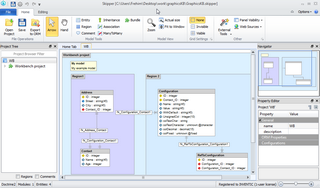
It is important to mention that SQLyog, HeidiSQL and SQL Power Architect are tools designed to work with the database structures and data manipulations. These tools offer large possibilities in this area. However, Skipper focuses ORM model design, field that is not covered by database administration tools. This is the main and most important difference we want to stress in this comparison.
Comparing features
In this table we want to briefly introduce the differences between Skipper, HeidiSQL, SQL Power Architect and SQLyog applications. More detailed description is available further in the article.
| Feature | Skipper | HeidiSQL | SQL Power Architect | SQLyog | |
|---|---|---|---|---|---|
| Visual Model | |||||
| Visual representation | ✔ | ✘ | ✔ | ✔ | |
| Basic objects (entity/table, field/column, index,...) | ✔ | ✔ | ✔ | ✔ | |
| Database objects (triggers, forms,...) | ✘ | ✔ | ✔ | ✔ | |
| Advanced objects (many-to-many, inheritance,...) | ✔ | ✘ | ✘ | ✘ | |
| ORM Frameworks | |||||
| ORM schema files import/export | ✔ | ✘ | ✘ | ✘ | |
| Knowledge of ORM framework keywords | ✔ | ✘ | ✘ | ✘ | |
| Specific ORM features (validators, behaviors,...) | ✔ | ✘ | ✘ | ✘ | |
| Database | |||||
| Direct access to database | ✘ | ✔ | ✔ | ✔ | |
| Database structure import/export | ✘ | ✔ | ✔ | ✔ | |
| Direct modification of stored data | ✘ | ✔ | ✔ | ✔ | |
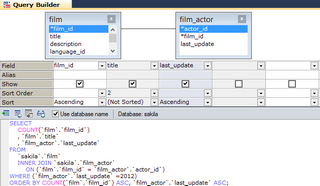
| Visual design of queries | ✘ | ✘ | ✘ | ✔ | |
| Data visualization | ✘ | ✘ | ✔ | ✔ | |
| Advanced Techniques | |||||
| Store model in project file | ✔ | ✘ | ✘ | ✔ | |
| Split model to standalone modules | ✔ | ✘ | ✘ | ✘ | |
| Share modules among multiple projects | ✔ | ✘ | ✘ | ✘ | |
| Customize and extend application | ✔ | ✔ | ✔ | ✘ | |
Detailed comparison
In this table you can find comprehensive feature comparison between Skipper, HeidiSQL, SQL Power Architect and SQLyog applications. As in the previous section, we will compare only the features related to ORM frameworks.
| Feature | Skipper | HeidiSQL | SQL Power Architect Community Edition | SQLyog | |
|---|---|---|---|---|---|
| Visual Model | |||||
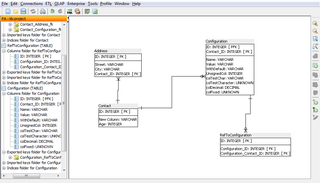
| Representation | Visualization of the ORM model and entities on the object level. | none | Basic visualization of the stored data as ERD. | Visual query and schema builder on the level of the data storage. | |
| Data elements | project, module, entity, field, association, many-to-many, inheritance, index | table, column, index, relation, view | table, column, index, relation, view | table, column, index, relation, view | |
| Visual model elements | region, comment | none | none | none | |
| ORM Frameworks | |||||
| Targeting | Created as a tool to work with ORM frameworks. Therefore, all ORM major frameworks like Doctrine, Doctrine2 and Propel. | Open-source database administration tool. | Open-source data modeling and data profiling tool. | Commercial database administration and monitoring tool. | |
| Supported frameworks | Doctrine, Doctrine2, Propel, CakePHP | none | none | none | |
| Formats | Schema files in XML, YML or PHP annotations format. | SQL | SQL | SQL | |
| Schema import | Imports any Doctrine, Doctrine2 or Propel schema files. | Does not import any schema files. Works only with databases. | |||
| Schema export | Exports schema definitions for Doctrine, Doctrine2, Propel or CakePHP framework. | Does not export schema definitions, works only on SQL level. | |||
| More ORM features | Continuous development and exports of the schema files. | none | none | none | |
| Database | |||||
| Direct access | Not able to access or modify database. Database logic is delegated to ORM Frameworks. | Allows for direct access to the database. It is possible to connect and modify data and structure of the database. | |||
| Structure import | Database structures can be imported to Skipper through ORM framework. Application cannot import the database structure directly. | Database structure can be exported/imported as SQL dump files. | Database can be forward/reverse engineered. | Database structures cannot be reverse engineered, database is modified in the connected database on the go. SQLyog does not use any internal model. | |
| Structure editing | Database structures cannot be modified directly. This is implemented by ORM frameworks (for example by migrations). | Can create, modify and delete table structures in the connected database. Can also create procedures, queries and forms. | |||
| Data editing | Skipper does not modify stored data in any way. Data are modified through entity manipulation and ORM framework. | Can create and modify stored data in the connected database. | Can compare, create and modify stored data in the connected database. | Can compare, create and modify stored data in the connected database. Allows data import from external sources. | |
| Project serialization | |||||
| Project file | Skipper stores into one or several files divided based on namespaces. | Database can be stored as a SQL Dump. | Saves database model to native project file. | Ability to restore Schema Designer or Query Designer sessions. | |
| Project format | Project is stored in well readable and proceedable XML files. | SQL dump file. | Project is stored as a XML file "*.architect". | Project is stored in a single XML file. | |
| Advanced Techniques | |||||
| Documentation | Visual model with comments can be exported as a PDF file. | Result of any data grid can be saved to CSV, HTML, XML, LaTeX, Wiki markup or PHP files. | Playpen (visual schema) may be printed or saved as a pdf file. | Actual database and query results can be backed up, but can be viewed only in SQLyog GUI. | |
| Model Viewer | You can browse complete visual model using the Free Viewer Tool. | none | You cannot browse model using any other tool than SQL Power Architect. | You cannot browse model using any other tool than SQLyog. | |
| Model reusability | With Skipper you can split your project to modules and share modules among several projects. | Enables to import complete database structure to a new database. | |||
| Customization | Wide range of application customizations. Templates, extendable properties, custom scripts, external tools, etc. | Open-source project. | Open-source project. | Supports only basic customization of user interface. | |
| Platform support | |||||
| Windows | Windows XP, Windows Vista, Windows7, Windows8 | Windows XP, Windows Vista, Windows7 | Windows/generic | Windows XP, Windows7, Windows8, Windows server 2003 and newer | |
| Mac OS X | 10.6.8+, 10.7, 10.8, 10.9 | Wine required | 10.4+ | Not supported | |
| Linux | Fedora, Ubuntu, Red Hat Linux | Wine required | Unix/generic | Not supported | |
Conclusion
SQLyog is powerful administrative and monitoring tool working on the data level, with direct access to tables, data storage and user privileges. Skipper can be a good complement to SQLyog. If you want to use ORM above the database created and monitored by SQLyog you can readily use Skipper to easily fine-tune your entities.
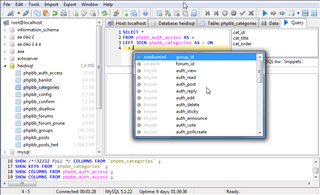
HeidiSQL is an Open-Source project that provides all the functions necessary for basic administration of database and data manipulation. It is very similar to SQL Power Architect Community Edition. However, SQL Power Architect offers the possibility to upgrade to commercial version with added features and functionality.
Skipper is a specialized tool for designing your model and creating schema definitions. You need to care only about the design of the model, which is visualized using extended ER diagram. Underlying database is being serviced by the ORM Framework.
If you need direct control and overview of your database, HeidiSQL, SQL Power Architect and SQLyog are a good choice. On the other hand, if you are using Doctrine, Doctrine2, Propel or CakePHP, and want to create schema diagram, generate or modify schema files, Skipper is a fast and perfectly suited tool to do this. Skipper will allow you to create ORM schema files quickly, efficiently and most of all automatically.